
A Visitor's Guide to Exploring a Medieval Cathedral Close
Arriving and Orienting Yourself
A medieval cathedral close is not simply the land around a great church. It is a walled or bounded precinct that once held almost everything a religious community needed to live, work and worship together. As you arrive, pause at the gatehouse and look at the whole space before you choose a direction. The cathedral usually sits to one side rather than in the middle, leaving room for cloister, chapter house, lodgings, granary, brewery, school and burial ground.
Check the cathedral's own opening times before you travel, as cloisters and chapter houses often keep shorter hours than the main building. Weekday mornings are the quietest. Wear soft-soled shoes, carry a small torch for dim passages, and be ready to close gates quietly behind you.
The Cloisters: The Working Heart
Walk into the cloister slowly. This four-sided covered walk, usually attached to the cathedral's south side, was the busiest part of the monastic day. Notice the vaulting overhead and the carved capitals where the ribs spring from the columns. Look for mason's marks and small graffiti scratched into the stone by centuries of hands.
In the walkway nearest the church you will often find a stone bench or a shallow recess once used for study. Monks copied manuscripts here, and the light falls best in the morning. The cloister garth — the open square in the middle — was sometimes a garden, sometimes a cemetery. Sit for a few minutes and simply listen. The cloister has its own acoustic: footsteps, a distant door, birdsong, the rustle of a robe that is no longer there. It is one of the calmest places in any British city.
The Chapter House and the Sound of Governance
Most cathedral closes include a chapter house, usually entered from the cloister's eastern range. These are often polygonal, with a single central pillar fanning into a stone vault. The shape is not merely decorative. A round or many-sided room carries the human voice cleanly, which suited the daily reading of a chapter of the monastic rule and the business that followed.
Stand near the centre and speak quietly to a companion. You will hear how the building flatters the voice. This is sacred sound in its most practical form — architecture designed so that a single speaker could be heard without strain, long before any electronic amplification existed.
Bells and the Sacred Soundscape
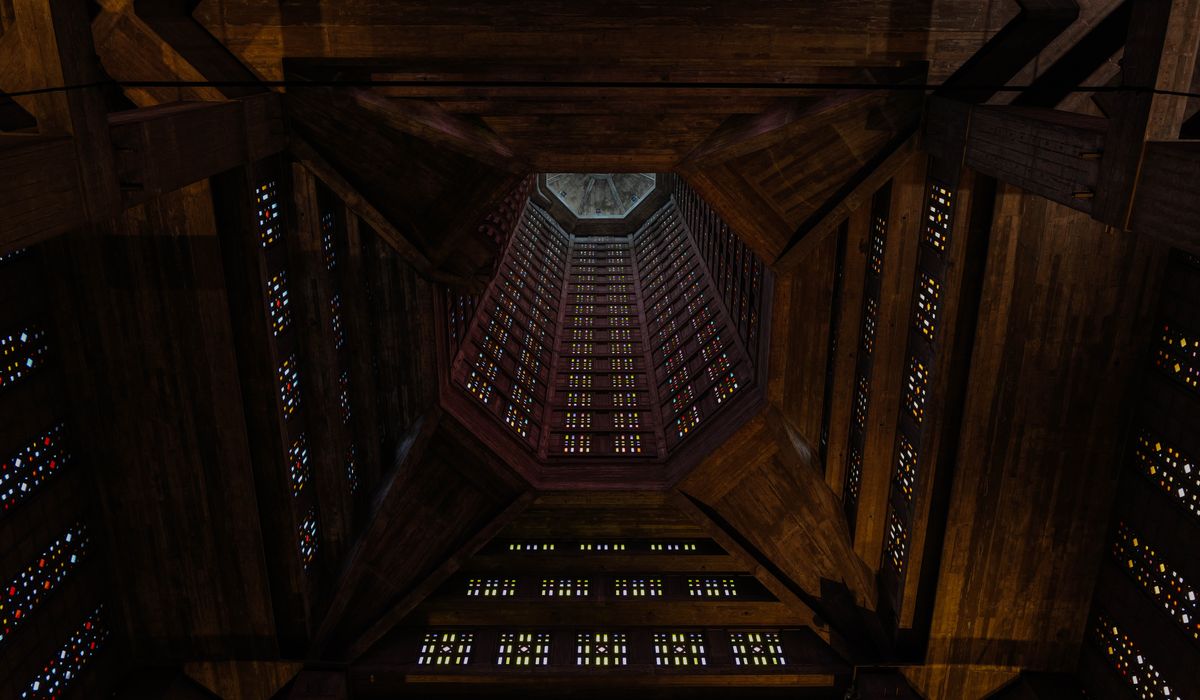
The cathedral tower is the close's loudest presence, and bell ringing is the sound most visitors remember. English change ringing developed in towers like these: bells hung on a wheel so they can be rung in shifting sequences rather than a single toll. If you can, time your visit to a practice evening and ask at the cathedral office or the tower door whether visitors may listen from the ringing chamber or the base of the tower.
Listen for the tenor, the deepest bell, which anchors the sound, and the lighter bells above it. A full peal can last three hours; a shorter touch of a few hundred changes is more common on practice nights. Step outside into the close while the bells are ringing and notice how the sound moves around the stone — now bright off the chapter house, now softened by the cloister. Bell founders often tuned their bells for the building they were to serve.
Gardens, Boundaries and Community Life
The green spaces of a close are not merely ornamental. Herb gardens supplied medicines and flavourings; orchards and vegetable plots fed the community; a dovecote or fishpond added protein. Look for surviving walls, gates and outbuildings that show how the precinct was divided.
- Infirmary and misericord: often set apart, for the sick and the elderly, usually with its own chapel.
- Lodgings and guest houses: the close welcomed pilgrims, traders and travellers, so hospitality was part of its purpose.
- School and library: education and record-keeping sat beside worship.
- Almonry and gatehouse: the place where charity was distributed and the boundary between sacred and secular space.
Notice too the gravestones, memorials and later houses built into the close after the Reformation. The precinct did not stop changing; it adapted, and many closes still shelter a small resident community today.
A Gentle Walking Route
Allow about ninety minutes. Begin at the main gatehouse and read any interpretation panel. Walk the cloister in the direction the notice suggests, pausing at each corner to look up at the vault. Enter the chapter house, stand centrally and listen. Cross the garth to the gardens and find the oldest tree. Finish near the tower just before a service or a ringing practice and simply sit on a bench.
Before you leave, look back at the close as a whole. It was built so that worship, work, study, hospitality and charity could share one bounded piece of ground. That combination, not just the cathedral itself, is what makes a medieval close such a rewarding place to explore.

4 Comments