
A Short History of English Organ Building Traditions
A Sound Shaped by Liturgy
English organ building was never simply a provincial branch of European craft. It grew up around the words and seasons of Anglican worship — the daily offices, the choral canticles, metrical psalms and the hymnody of the parish. The instruments that resulted were designed less for concert display than for accompanying voices, leading congregations and giving the liturgy a dignified frame. Walk into a country church, open a modest eighteenth-century case, and you can read the priorities of its first users in the stop list itself.
Seventeenth-Century Chamber Organs
The earliest English organs surviving in any number are chamber organs: compact single-manual instruments built for private houses, chapels and small churches. Their compass was often short, perhaps GG to d''' with a short octave in the bass, and they had no independent pedal department at all — merely pull-downs that dragged the lowest manual keys into action. A typical specification might run to a stopped diapason of wood, an open diapason or principal of metal, a fifteenth, a two-rank mixture and a short reed such as a cremona. Four or five stops, hand-blown, was plenty.
Immigrant craftsmen from the Low Countries and northern Germany brought voicing skill to these islands, but English taste quickly asserted itself. Our builders favoured a sweet, blending diapason chorus over brilliant solo registers, and they cased their work handsomely in oak with painted panels, fretwork and folding doors. Placement was practical: a west gallery, a corner of the chancel, or a purpose-built loft where the organist could see both choir and congregation.
The Georgian Parish Organ and the Swell
The eighteenth century brought organs into the mainstream of parish life, funded by subscription, faculty and local gentry. Two developments matter most. The first was the swell box, an enclosed division whose louvres could be opened to create a crescendo — the beginnings of expression in English playing. The second was the gradual standardisation of a two-manual layout: Great and Swell, with a small Choir organ in larger churches.
Stop lists grew in colour and confidence. A Georgian scheme might include:
- Open Diapason and Stop Diapason on the Great
- Principal, Twelfth, Fifteenth and Sesquialtera for chorus building
- Cornet and Trumpet for brilliance
- Hautboy, Vox Humana and a gentle Stopped Diapason in the Swell
Tuning was still unequal. Many organs stood in mean-tone or a modified temperament, which coloured remote keys sharply and made the home keys glow. Pitch varied from church to church, sometimes by a semitone or more, so visiting singers learned to adapt. Equal temperament arrived slowly through the nineteenth century, and with it a smoother but less characterful harmonic world.
Victorian Confidence and the Parish Instrument
Industrial wealth, church restoration and a boom in new churches transformed the English organ. Instruments grew larger, heavier and louder. Builders adopted German ideas: full compass manuals, complete and independent pedal boards with 16ft and sometimes 32ft stops, higher wind pressures, and reed stops of real fire. The Great became a chorus instrument built on a 16ft foundation and crowned with mixtures; the Swell became a large, enclosed orchestra with strings, harmonic flutes and a powerful reed chorus.
Action technology changed just as quickly. Long mechanical key action gave way to tubular pneumatic from the middle of the century and to electro-pneumatic action in the 1890s. With these came adjustable combination pistons, composition pedals and the ability to control a vast instrument from a compact console. This was the era of the parish organ as a statement of local pride — and of an instrument that could accompany several hundred singers without strain.
Voices and the Anglican Ear
What makes an English organ recognisable is not size but blend. The diapason family sits at the centre: full, articulate and even across the compass, with clean bass and a bright but never brittle treble. Flutes are woody and vocal; strings are warm rather than thin; reeds are broad and fiery, from a rounded Trumpet to a commanding Tuba or Clarion. Voicing is done at the pipe — at the foot, languid, upper lip and mouth — and small adjustments there change the character of a whole department.
This palette serves the liturgy precisely. A quiet 8ft flute accompanies a chanted psalm; the full Swell carries a hymn's final verse; a solo cornet or trumpet lifts an anthem line. Voluntaries before and after the service allow the player to show the instrument's range, but the primary duty remains accompaniment, and the best English organs are built around that duty.
Casework, Architecture and Sacred Sound
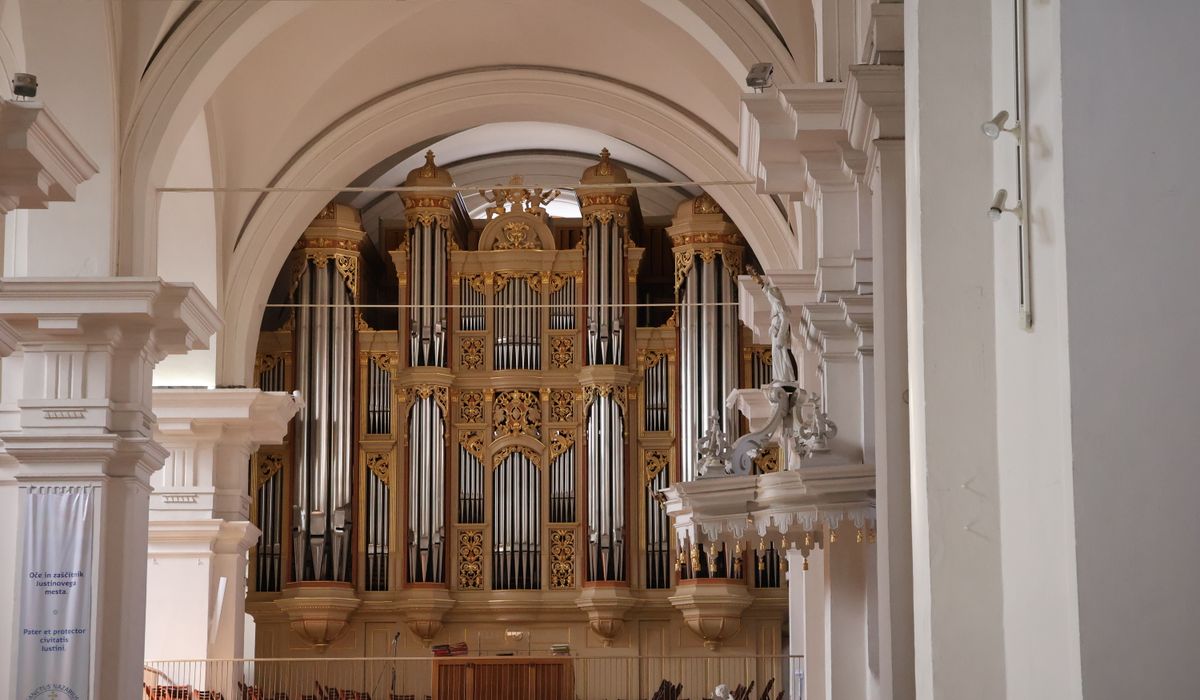
Where an organ stands matters as much as what it contains. A west gallery case speaks down the length of the nave; an instrument tucked under the tower can sound congested; a chancel-side organ balances choir and congregation differently again. Casework evolved from Georgian mahogany and pine to Gothic Revival oak, with speaking pipes displayed in towers and flats, and dummy pipes used to complete a design. Stone churches with three or four seconds of reverberation flatter the organ enormously; the same instrument in a carpeted, heated building can sound dry and thin.
Humidity and heat are the practical enemies. Organs near radiators drift sharp, tuning becomes unstable and pipework suffers. Seasoned tuners visit twice a year, and a little humidification in winter will do more for stability than any amount of tinkering.
Bells belong to the same soundscape. A peal rung before Matins calls the parish in from the street, then falls silent as the organ takes over inside. The two never compete for long, yet together they define the acoustic identity of an English church — one voice summoning, the other accompanying, both shaped by centuries of worship.

4 Comments